Why Winemakers Retire Oak Barrels and Where They Go
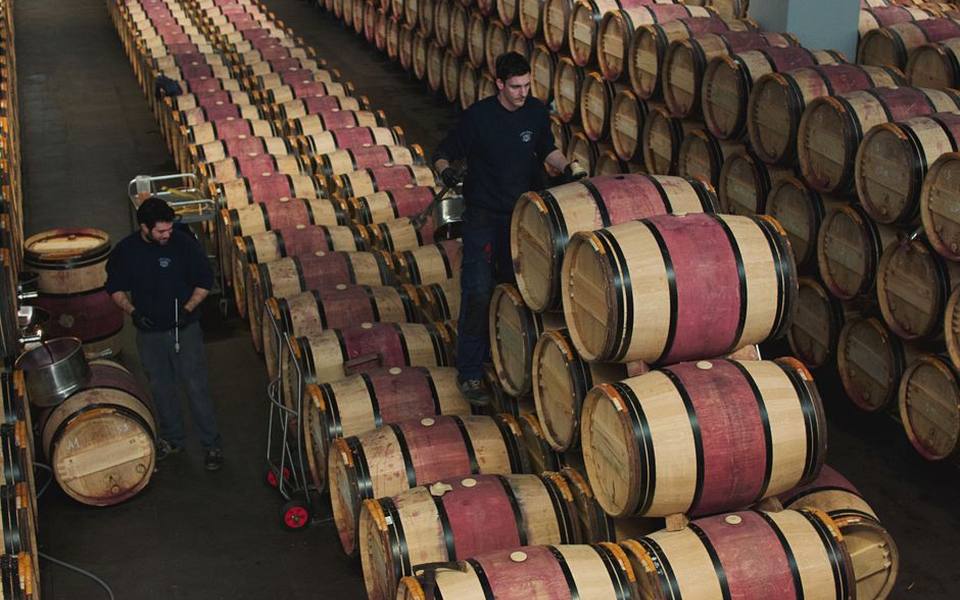
Finding an authentic retired vessel begins with understanding how commercial wineries manage their cooperage inventory. Winemakers rely on white oak barrels to gently impart wood tannins, vanilla notes, and subtle oxygenation during aging, but this extractive capability declines significantly over time. After roughly three to five vintages, a barrel becomes neutral, no longer contributing aromatic wood complexity to the wine. At this stage, cellars often cycle these vessels out of circulation to clear rack space for new barrels.
While neutral vessels can still serve for passive bulk aging, many operations sell their surplus cooperage directly to the public or wholesale distributors. Regions with dense vineyard concentrations, such as the thousands of Wineries in California, frequently generate steady secondary markets for retired wood. Craft breweries, cideries, and home hobbyists buy up a portion of this supply, while the remainder flows toward landscape centers and woodworking artisans.
These decommissioned vessels offer remarkable value because they are handcrafted structural masterpieces. A standard wine vessel is built from dense American or French white oak held under intense mechanical tension by galvanized steel hoops, without glues or nails. When you search for retired cooperage, you are acquiring dense, rot-resistant hardwood engineered to remain watertight under substantial liquid weight for decades.
Where to Search for Authentic Barrels Near You
Direct outreach to local vineyard cellars remains one of the most reliable methods to locate authentic retired stock. Winemakers typically review their barrel inventory twice a year, usually in late winter before bottling or immediately following the autumn harvest crush. Calling production facilities ahead of time or asking cellar hands during guided winery tours often reveals unlisted stock that cellars are eager to clear out of barrel rooms.
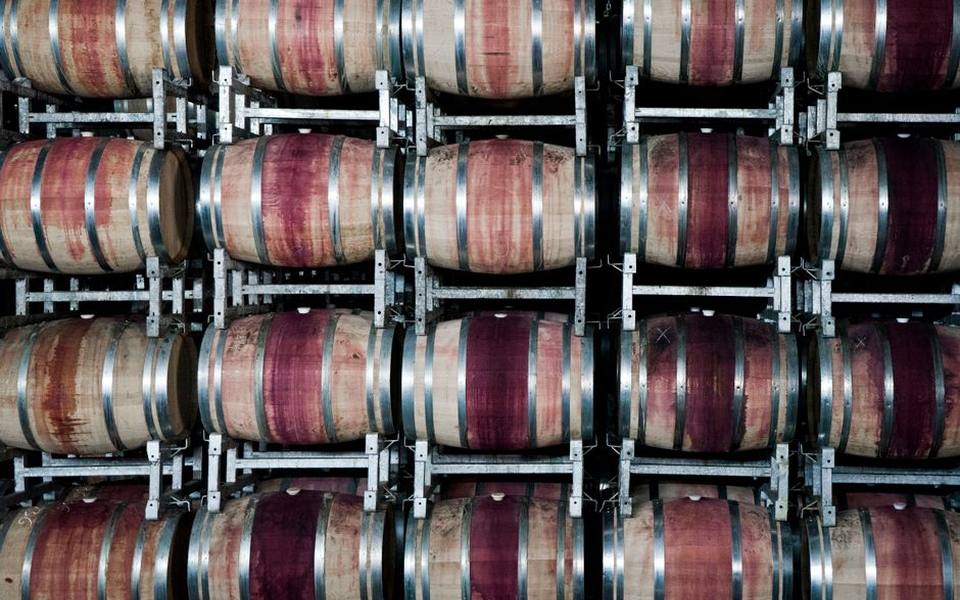
If you do not live near an active viticultural area, agricultural supply cooperatives and independent feed stores frequently bring in truckloads of used cooperage during the spring planting season. These retailers typically sell barrels either whole or pre-cut into halves for container gardening. The markup through farm stores is modest, and you avoid the logistical headache of freight shipping, which often exceeds the cost of the timber itself.
Online neighborhood marketplaces and estate auctions serve as another frequent source for single barrels. Homeowners who used barrels for rustic wedding decorations or garden focal points frequently resell them when moving or redesigning. When browsing local classified ads, look closely at the photos to ensure the piece is genuine cellar-grade oak rather than a thin ornamental pine imitation sold by big-box craft outlets.
Key Inspection Points Before You Purchase
Physical inspection is essential before paying for any wooden vessel, as structural degradation can make woodworking difficult. Walk around the barrel to examine the steel hoops, which should sit snugly against the wood without severe bends or missing securing rivets. If hoops have slipped down the taper because the wood has dried out and shrunk, confirm that the staves are still aligned and have not warped or split across their face.
Smell inside the bung hole whenever possible. A sound wine vessel should give off a rich scent of aged red or white wine, clean oak, and cellar moisture. Avoid any piece that emits an acrid vinegar odor, an intense chemical smell, or a sharp moldy stench. A vinegar smell suggests active acetic bacteria, which can harbor fungal pathogens harmful to garden roots, while chemical aromas might mean the container was previously repurposed to store motor oil or industrial pesticides.
Check the thickness and wood type of the flat head ends. Authentic wine barrels use solid oak staves roughly three-quarters of an inch to an inch thick. Tap along the bottom staves to feel for wood rot, which typically starts where a barrel sat directly on damp ground. A firm, resonant tap indicates sound wood, whereas a dull, soft give means structural decay has already penetrated the heartwood.
Transportation Logistics and Weight Considerations
Transporting full-sized cooperage requires adequate vehicle planning, as these pieces are heavier and bulkier than most buyers realize. A standard 59-gallon Bordeaux or 60-gallon Burgundy vessel weighs roughly one hundred to one hundred twenty pounds dry. If the wood is still saturated with residual cellar moisture, the overall weight can climb noticeably higher, making single-person handling hazardous without a hand truck or furniture dolly.
The external dimensions typically measure approximately thirty-seven inches tall and roughly twenty-eight inches across the widest belly bilge. A midsize crossover or sport utility vehicle can rarely fit more than one barrel with the rear seats folded down, and the circular shape tends to roll during transit. A standard pickup truck bed or utility trailer is ideal, allowing two to four barrels to be laid horizontally or stood upright against the cab.
Always secure the load using heavy-duty ratchet straps threaded through the bed tie-down points. If hauling barrels upright, loop straps around the narrow waist above the widest bilge point to prevent tipping when braking. If placing them on their curved sides, use wooden wedges or rubber chocks under the bilge to stop lateral rolling, and avoid stacking them vertically unless they are strapped securely into dedicated transport cradles.
Preparing and Cutting Oak Staves for Planters
Before making any cuts into a barrel, you must understand that the staves are held together exclusively by hoop compression. As the wood loses moisture and dries out in an open-air workshop, the staves shrink, causing the steel bands to drop off and the entire unit to collapse into individual planks. You must mechanically fasten every stave to the adjacent steel hoops before touching the wood with a saw blade.
Work your way around the vessel using short, rust-resistant exterior screws, typically stainless steel or coated deck screws roughly one inch in length. Drill small pilot holes through the steel hoop directly into the center of each wooden stave, then drive screws flush along the hoops that will remain on your finished piece. For a classic half-barrel planter, you will want to secure the two steel hoops nearest the flat head end on both the top and bottom halves before cutting.
Once the staves are mechanically anchored to their hoops, measure the exact center of the barrel along the belly staves using a flexible measuring tape. Mark a continuous cutting line around the circumference with chalk or masking tape. A circular saw with a general-purpose carbide-tipped blade makes quick work of the cut, though a reciprocating saw with a wood blade works well if you take your time to maintain a straight, even line.
Drilling Drainage and Soil Health in Planters
Oak retains moisture exceptionally well, which can create waterlogged soil conditions unless you provide generous bottom drainage. Turn your cut half-barrel upside down so the flat circular head faces upward, and drill between six and ten evenly spaced drainage holes using a half-inch or three-quarter-inch spade bit. Barrels used for deep-rooting plants or small ornamental trees require unrestricted outflow to prevent root rot in rainy weather.
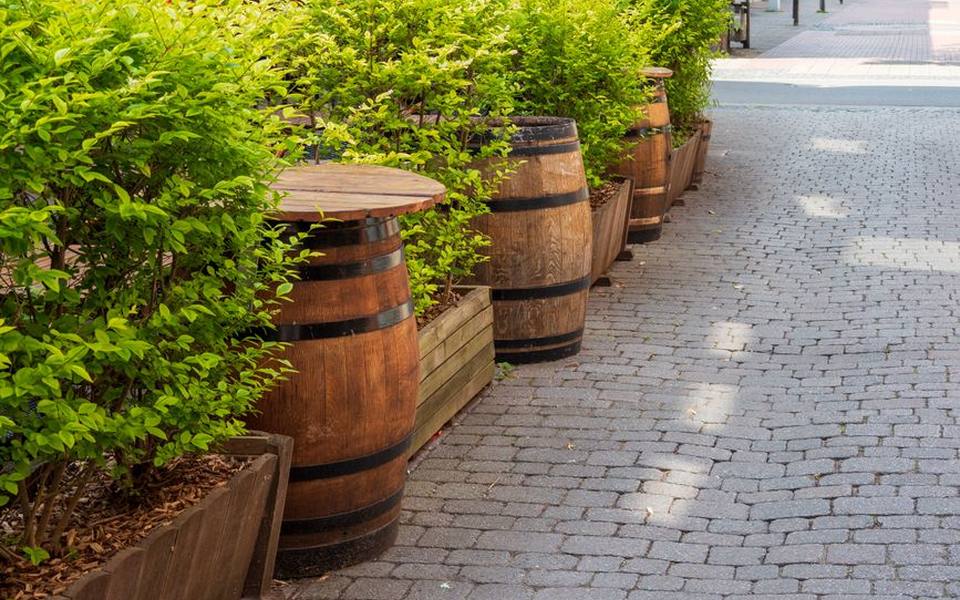
Cover the drainage holes on the interior with a layer of synthetic landscape fabric or durable wire mesh. This prevents potting soil from washing out through the bottom while maintaining unrestricted water flow. Avoid the common folklore advice of filling the bottom third with gravel or broken pottery shards, as modern horticultural research shows this simply raises the perched water table inside the container, reducing usable root depth.
Fill the barrel with a lightweight, well-draining potting mixture rather than dense topsoil from your yard. Because an oak planter holds a massive volume of growing media, garden soil will pack down over months into a dense, airless mass that suffocates tender plant roots. Elevating the finished planter on rot-resistant wooden slats, bricks, or rubber potting feet ensures airflow underneath and keeps the base staves from rotting against wet ground.
Building Rustic Home Furniture and Decor
Beyond outdoor gardening, authentic cooperage lends itself to interior woodworking, creating warm, character-filled tables and cabinetry. A whole vessel stands at roughly thirty-seven inches tall, which aligns closely with standard counter-height pub tables. By securing an oversized glass, copper, or reclaimed wood round to the top head, you can build an immediate focal point for a basement wet bar, tasting room, or game area.
The natural curve of individual staves, known as the compound bilge taper, makes them ideal for building ergonomic furniture. Woodworkers frequently disassemble retired barrels to shape porch rocker seats, curved bench backs, wine bottle racks, and hanging chandeliers. The rich deep purple or burgundy staining on the stave interiors, absorbed over years of holding Pinot Noir or Cabernet Sauvignon, provides a distinct organic color that no commercial wood stain can duplicate.
You can also create enclosed storage by cutting a functional hinged door into the side of a whole barrel. Carefully screw several central staves together with horizontal battens on the interior side before cutting out the door opening, ensuring the door panel keeps its original curve. Add magnetic catches, vintage iron strap hinges, and an interior shelf cut from marine-grade plywood to produce an authentic spirits cabinet.
Preserving Wood and Metal Against Weathering
Unfinished oak exposed to open sunlight and rain will quickly oxidize into a soft, silvery-gray patina, similar to untreated cedar siding. If you appreciate that weathered farmhouse look, you can leave the exterior wood raw, though the staves will eventually check and crack along surface grain lines under harsh UV rays. For those who prefer rich amber wood tones, applying an exterior penetrating oil, such as boiled linseed or pure tung oil, enhances grain depth without peeling.
For planters and patio tables that face extreme weather, a spar varnish or marine-grade polyurethane containing UV inhibitors provides maximum physical protection. Apply several thin coats to the exterior staves and top edges, allowing thorough drying between applications. Avoid coating the wet interior of garden planters with synthetic polyurethane, as wet soil against a sealed film can trap moisture unevenly within the wood fiber and encourage premature rot.
Do not overlook the steel hoops, which can corrode if the galvanized zinc layer was scrubbed or sanded away during cleanup. Wire-brush any surface rust from the metal, mask off the oak staves with painter's tape, and apply a rust-inhibiting black or matte clear enamel to the bands. This crisp contrast between dark metal hoops and honey-toned oak staves produces the classic tavern look found at many wineries featuring outdoor seating.
Seasonal Upkeep and Stave Rehydration Techniques
Oak cooperage is a living assembly that expands when damp and contracts when dry. If an empty barrel sits in an arid garage, sunny patio, or air-conditioned living room for extended months, you may notice small gaps appearing between the staves and the metal hoops slipping down. This does not mean the barrel is ruined; it simply requires controlled rehydration to swell the dense oak cells back against each other.
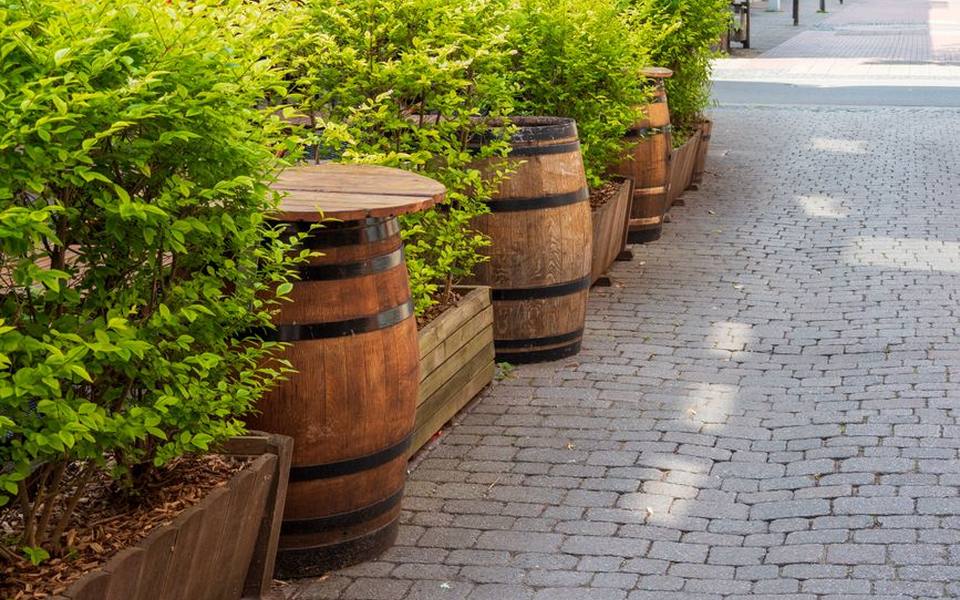
To swell a loose barrel, stand it upright and fill the top recessed head area with clean water, allowing the moisture to wick down through the end grain of the staves. Alternatively, drape damp burlap sacks or heavy cotton towels over the barrel and mist them daily with a garden hose. Within forty-eight to seventy-two hours, the oak will drink in the moisture, expanding in volume until the joints close tightly and the steel bands lock back in place.
In regions subject to hard winter freezes, planters require simple preparation to avoid stave cracking. While oak handles cold weather well, soil saturated with late autumn rain will expand dramatically when frozen solid, placing outward pressure on the curved staves. Tucking planters under covered eaves, wrapping the outer circumference with insulating burlap, or moving them near a sheltered foundation wall helps protect both delicate perennial roots and wooden joins.
Spotting Quality Cooperage versus Whiskey Barrels
When shopping for used barrels, you will encounter both wine cooperage and retired whiskey drums, each possessing distinct physical qualities suited for different projects. Wine barrels are almost universally crafted from tight-grained French, Hungarian, or American white oak that has been gently toasted over an open fire, preserving the natural golden tone of the timber. Whiskey vessels, by contrast, are made primarily from heavier American oak subjected to a direct, intense char on the interior.
The deep interior char of a bourbon drum leaves a thick layer of brittle, black carbon that flushes out as messy grit when converting the unit into an indoor furniture piece. While whiskey barrels emit a sweet vanilla and bourbon aroma that many hobbyists love, the intense carbon layer can complicate cutting and sanding. Wine barrels offer cleaner, uncharred wood surfaces, often stained an attractive ruby red by years of cellar aging.
Take time to examine cooperage markings stamped into the flat head of the barrel. Renowned French and American cooperages stamp their logos, wood forest origins, and toast levels directly onto the oak head. Finding these maker marks confirms that the piece is genuine cellar-grade hardware, making your finished garden feature or handcrafted table a true conversation piece whenever guests gather for drinks.
Published 2026-09-21 · reviewed with each rebuild, last September 2026.
Find wineries near you
The directory lists 14,608 wineries by state and city — pick your state or use the “Near me” button in the header.
More guides
-
 Service
How to Become a Sommelier: Career Paths, Tasting Technique, and Practical Service
-
 Service
What to Wear to a Winery: Practical Outfits, Etiquette, and Food Pairings
-
 Owning
The Ultimate Wine and Food Pairing Guide: From Cheese to Desserts
-
 Buying
Understanding Kosher, Organic, and Biodynamic Wines: Production, Storage, and Pairings
-
 Buying
A Guide to Ordering Wine Online and Purchasing Bulk Alcohol for Events
-
 Buying
The Chemistry of Wine Fermentation: Yeast Roles, Malolactic Conversion, and Flavor Balance
-
 Buying
Understanding the Wine Sweetness Scale: From Crisp Dry to Indulgent Sweet
-
 Money
MoneyWine Tasting Costs Explained: What to Expect in Napa Valley and Beyond
-
 Owning
The Ultimate Guide to Charcuterie Boards: Styling, Pairings, and Recipes
-
 Owning
Crystal Wine Glassware Guide: Types, Brands, Care, and Stemless Styles
-
 Buying
Understanding Bold Reds: Dry Wines, Tannin Profiles, and Old Vine Zinfandels
-
 Storage
Choosing the Best Wine Fridge: Sizing, Cooling Zones, and Placement Guide
-
 Buying
Non-Alcoholic Wine Guide: Methods, Profiles, and What to Expect
-
 Buying
Personalized Wine Gifts: Custom Bottles, Engraved Glasses, and Custom Labels
-
 Owning
Essential Wine Accessories: Openers, Preservation Systems, Decanters, and Storage
-
 Buying
White and Rosé Wines: From Crisp Whites to Dry Rosés and Late Harvest Riesling
-
 Buying
Food and Wine Pairing Guide: Salmon, Turkey, Ham, Lamb, and Lasagna
-
 Buying
Large Format Wine Bottles: Magnums, Jeroboams, and Champagne Sizes Explained
-
 Service
Farm Wineries, Agritourism, and Sustainable Vineyard Experiences Across America
-
 Owning
Wine and Food Pairing Guide: Charcuterie Boards, Cheeses, and Dinner Courses
-
 Buying
Specialty Wines, Modern Cellar Styles, and Buying Smart Online
-
 Owning
Planning Memorable Vineyard Visits, Historic Estates, and Tasting Room Escapes
-
 Buying
Sweet and Refreshing White Wines: A Guide to Styles, Grapes, and Tasting Profiles
-
 Service
Cooking with Wine and the Practical Art of Culinary Pairings
-
 Owning
Luxury Glassware and Crystal Stemware: A Guide to Vintage Patterns, Modern Makers, and Care
-
 Storage
Modern Wine Refrigerators and Coolers: Sizing, Placement, and Everyday Performance
-
 Service
Winery & Vineyard Weddings: Venues, Planning, and Event Etiquette
-
 Owning
Electric Wine Openers, Vacuum Stoppers, and Preservation Systems: A Complete Guide
-
 Safety
Traveling with Wine: Suitcases, Luggage Bags, and Airline Rules
-
 Buying
Red Wine Varietals Explained: Malbec, Cabernet, Merlot, and Zinfandel
-
 Owning
Artisan Charcuterie Boards and Wine Party Snack Styling Guide
-
 Buying
Garlic Infused and Extra Virgin Olive Oils: Flavors, Brands, and Culinary Uses
-
 Buying
US Wine Trails and Estate Wineries: Scenic Routes and Destination Guide
-
 Buying
Crystal Wine Glasses, Fine Stemware, and Barware Accessories Guide
-
 Service
The Complete Guide to Winery Visits: Tastings, Vineyard Tours, and Visitor Experiences
-
 Owning
Pairing Wine with Charcuterie, Cheeses, and Seasonal Dinners
-
 Buying
Wine Glassware, Decanters, and Accessories Buyer Guide
-
 Storage
Home Wine Storage, Refrigeration, and Cellar Inventory Guide
-
 Buying
Winery Tours, Tasting Room Experiences, and Vineyard Weddings