The Distinction Between Everyday Glass and Fine Crystal
Holding a piece of true crystal immediately reveals why it has commanded formal tables for centuries. Traditional soda-lime glass serves daily hydration well, but crystal incorporates mineral additives that fundamentally change how the material behaves. The presence of minerals allows glassmakers to pull stems thinner, carve sharper geometric facets, and achieve a clarity that standard kitchen tumblers simply cannot match. When light strikes a faceted stem, it splits into distinctive prisms that give dinner tables their characteristic sparkle.
Weight provides the most reliable tactile difference. A hand-blown or pressed crystal goblet feels reassuringly dense in the palm, anchored by a weighted base designed to balance the height of a generous bowl. Beyond physical mass, crystal produces a resonant musical chime when tapped gently with a fingernail, contrasting sharply with the dull click of soda-lime glass. That resonance stems from the structural elasticity of the material, which permits fine walls without sacrificing structural rigidity.
Over the decades, production methods split between heavy cut crystal and featherlight pulled crystal. Cut pieces rely on deep, wheel-carved incisions to maximize refraction, creating a brilliant, glittering appearance under candlelight. Pulled modern stems prioritize sensory appreciation of the beverage, featuring sheer rims cut by diamond saws or lasers to ensure an uninterrupted transition from bowl to palate.
Understanding Vintage Lead Crystal and Safe Usage
Collectors browsing antique shops and estate sales will frequently encounter vintage lead crystal. Historically, European and American standards required at least twenty-four percent lead oxide to earn the full lead crystal designation. The additive lowered the melting point of molten silica, giving master cutters a softer canvas that yielded razor-sharp facets, exceptional refractive brilliance, and a distinctive heavy hand-feel that became synonymous with luxury throughout the nineteenth and twentieth centuries.

The presence of lead naturally raises questions for modern enthusiasts who want to use their collections rather than keep them locked behind cabinet glass. Public health specialists and glass conservators agree that drinking wine or water during a typical dinner service poses minimal risk, as liquids remain in contact with the glass for only minutes or hours. The surface leaching rate over the duration of an evening meal is typically negligible for healthy adults.
Storage practices, however, follow much stricter boundaries. Acidic beverages such as port, bourbon, or dry reds should never be stored long-term in antique leaded vessels. Keeping spirits in a leaded decanter for weeks or months allows heavy metal ions to migrate into the liquid in measurable concentrations. Enjoy vintage stemware freely at dinner, but store your open bottles in modern glass containers and fill antique display pieces only immediately before the meal begins.
French Elegance on the Family Table: The Longchamp Pattern
Few patterns in postwar dining achieved the widespread affection of the Longchamp crystal glass pattern manufactured by Cristal d'Arques in northern France. Introduced in the late twentieth century, this design brought the visual grandeur of aristocratic cut glass into millions of family homes at an approachable cost. The pattern features stacked, vertical diamond facets circling the lower bowl, terminating in stylized palmette cuts that scatter ambient dining room lighting across the tablecloth.
The collection became a fixture of bridal registries and holiday celebrations, offering matched suites that encompassed water goblets, champagne flutes, and classic wine stems. Selecting Cristal d'Arques wine glasses allowed hosts to set a coordinated, formal table without the crippling anxiety of breaking irreplaceable hand-cut family heirlooms. The thick stems and sturdy base plates delivered durability that stood up to lively dinner party banter and multiple table resets.
For celebratory toasts, Longchamps champagne flutes remain popular on both vintage markets and contemporary dinner tables. Their slender silhouettes maintain a steady stream of carbonation while the deeply carved base reflects the effervescence inside the flute. Whether you inherited a set or acquired pieces through neighborhood estate sales, these classic French designs remain among the easiest vintage stems to maintain and replace.
Mid-Century Americana: Princess House Stemware
In the United States, direct-sales dining parties throughout the nineteen-seventies and eighties introduced thousands of households to Princess House stemware. Unlike the heavy geometric cutting popular in European crystal, the signature Princess House style centered on delicate botanical cuttings. Their defining Heritage collection featured frosted, hand-cut floral garlands and trailing leafy vines etched gracefully across thin, blown clear bowls.
These glasses represented a distinct aesthetic shift toward lighter, romantic tabletop styling. The stems were typically slender and flared gently outward toward the foot, balancing the delicate floral wheel cutting on the upper body. For generations of American hostesses, bringing out the floral etched stemware marked Thanksgiving dinners, anniversary toasts, and major family milestones, making them sentimental centerpieces in family china hutches.
Today, collectors value these mid-century sets for their airy charm, which pairs seamlessly with farmhouse pottery and vintage lace linens. Finding replacement stems remains remarkably straightforward at regional antique malls and estate sales, as vast quantities were preserved carefully by original owners who rarely washed them in machines. Their lighter build requires gentle handling, but they bring a soft, vintage warmth to any relaxed weekend dinner.
Italian Innovation: RCR Lead-Free Crystal Goblets
Modern table dressing often favors the striking Italian designs produced by RCR Cristalleria Italiana, situated in the heart of Tuscany. Over recent decades, RCR pioneered the transition away from traditional lead formulas toward proprietary eco-crystal glass. This modern composition replaces lead with alternative mineral compounds, delivering brilliant clarity, high sonority, and exceptional break resistance while remaining completely recyclable and safe for everyday dining.
Home bartenders and dinner party enthusiasts often turn to RCR wine glasses when seeking deep vintage-inspired geometric facets paired with modern durability. Collections like Melodia and Oasis feature rich, vintage cut patterns that recall classic mid-century cocktail lounges. The weight in hand feels substantial, yet the lead-free glass withstands high-temperature cycles far better than fragile historical antique wares.
For fuller red varietals and mixed water services, RCR wine goblets offer a broad, generous silhouette that gives the wine room to breathe while presenting an ornate visual profile. Their sturdy stems make them a practical choice for lively gatherings where delicate pulled stems might snap under pressure. They bridge the gap between traditional prestige cutting and the practical needs of modern hospitality.
Modern Glamour: Swarovski Crystal Barware
At the pinnacle of contemporary decorative luxury sit crystal glasses Swarovski embellishes for formal toasting and ceremonial gifting. Known globally for precision-faceted decorative gemstones, the Austrian house applied its cutting expertise to modern stemware by incorporating loose, shimmering faceted crystals directly inside hollow glass stems. The result is an eye-catching design where the stem itself acts as a sealed, light-catching kaleidoscope.
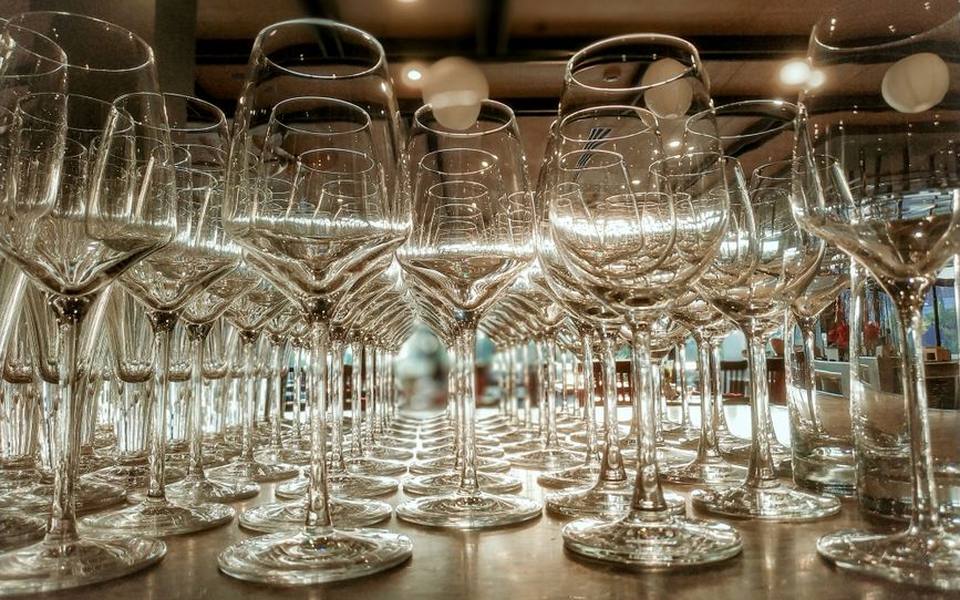
These pieces cater primarily to milestone celebrations such as weddings, major anniversaries, and formal galas. The visual impact on a dressed table is immediate, as every movement of the glass causes hundreds of internal facets to shift and catch surrounding candlelight. Rather than carving incisions into the bowl, the exterior glass remains ultra-smooth and clean, concentrating decorative drama entirely within the stem structure.
Owning these specialized pieces requires deliberate care, as the bonded components cannot tolerate thermal shock or mechanical jostling. While standard stemware can occasionally survive minor bumps, celebratory crystal featuring inset decorative elements must be washed by hand with lukewarm water and dried immediately with micro-fiber towels to maintain crystal clarity and protect the structural bonds.
Guests attending luxury tasting events or enjoying curated wine by the glass often appreciate this intersection of jewelry design and functional dining, where the stemware functions as conversation piece and table sculpture simultaneously.
Analytical Tasting: The Role of Wine Sampling Glasses
While ornate cut crystal commands attention at a formal banquet, serious evaluation demands wine sampling glasses designed purely for sensory analysis. Often standardized according to international tasting benchmarks like the ISO specifications, these glasses prioritize uniform shape over decorative facets. A rounded egg-shaped bowl tapers smoothly toward a narrow rim, concentrating volatile aromatic compounds directly toward the taster's nose while leaving ample headspace for swirling.
In production facilities and professional tasting rooms, sampling stems feature modest volume capacities, typically holding around seven to eight ounces when filled to the brim. In practice, a standard tasting pour occupies only two ounces, sitting precisely at the widest diameter of the bowl. This specific liquid-to-air ratio maximizes aroma evaporation without requiring excessive glass tilting during evaluation.
Enthusiasts exploring wine tasting flights or visiting commercial estates for formal wine tastings will notice how these utilitarian glasses strip away visual distractions. The glass walls are completely smooth and free of color or etching, allowing the taster to examine clarity, color depth, and viscosity without optical interference.
Adding a half-dozen sampling stems to your home bar provides an educational tool for side-by-side comparisons. Testing two vintages in identical, neutral glasses reveals structural nuances that might remain hidden when drinking from heavy, cut goblets.
Decanting Craftsmanship: Vintage Cut Glass and Handled Vessels
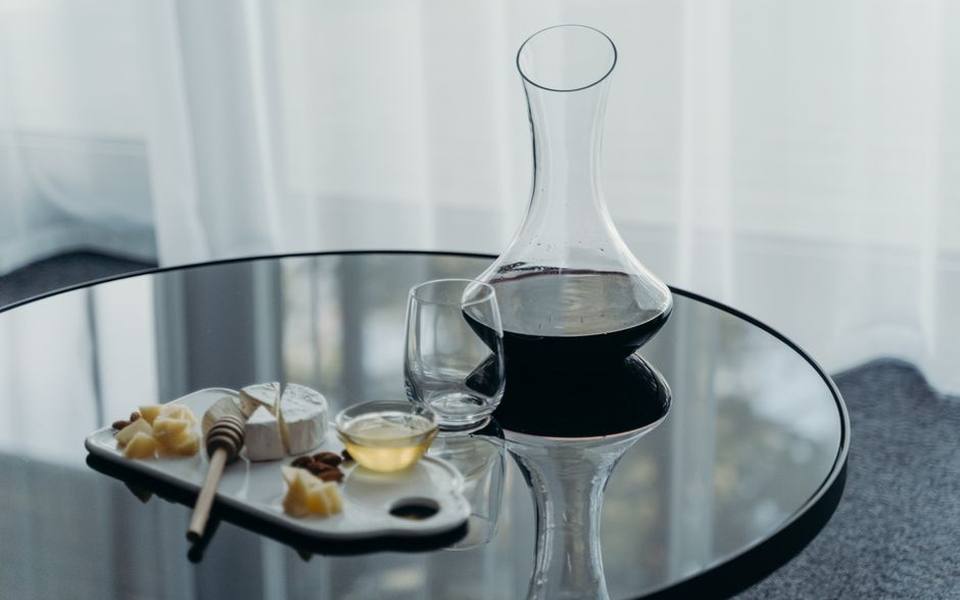
Decanters represent the architectural focal point of fine wine service, serving both practical aeration needs and historic presentation rituals. A vintage cut glass decanter brings theatrical brilliance to the table, using deep diamond facets and polished starbursts to refract the deep ruby tones of aged red wines. Historically, decanting separated clean wine from bitter sediment formed during decades of cellar aging.
Among vintage collectors, a crystal decanter with handle—frequently referred to historically as a claret jug or ewer—holds particular appeal. The addition of an arched crystal or silver-plated handle offers superior balance when pouring heavy volumes. The handle allows the host to tilt the vessel smoothly with one hand while observing the clarity of the liquid through the neck with the other, preventing accidental bottle drips onto fine linen.
Operating vintage decanters requires attention to air passage and stopper condition. Original ground-glass stoppers were individually hand-fitted to their respective necks; swapping stoppers between different vintage decanters often results in loose fits or stuck plugs. When enjoying cellar bottles after taking winery cellar tours, pouring wine through an ornate cut decanter aerates the liquid while honoring the time-honored ceremony of classic hospitality.
Completing the Setting: Crystal Glasses for Water
A formal multi-course place setting remains incomplete without dedicated crystal glasses for water. In traditional etiquette, the water goblet is the largest stem on the table, positioned directly above the dinner knife and slightly to the left of the white and red wine stems. Using cut crystal water goblets grounds the place setting, echoing the cuts or proportions of the surrounding wine glasses to establish visual harmony across the spread.
Water stems generally feature thicker walls and sturdier stems than delicate burgundy balloons. Because guests reach for water continually throughout a long meal, these glasses must withstand frequent lifting, ice additions, and rapid refills without tipping. Many hosts prefer footed goblets over flat tumblers because the stem prevents condensation on cold water from soaking into tablecloths or leaving water rings on polished wood.
Coordinating your water service does not require matching the exact pattern of your wine glasses. Many interior designers suggest pairing minimalist, unadorned crystal water goblets with deeply cut vintage wine stems to keep the table setting from feeling visually cluttered. The clear water acts as a visual palette cleanser, allowing the colors of your chosen wines to take center stage.
Washing, Drying, and Preserving Fine Crystal
The greatest threat to fine glassware is not the dining table, but the kitchen cleanup. Dishwashers subject delicate stems to high water temperatures, abrasive alkaline detergents, and violent water jets that cause thin stems to vibrate against neighboring racks. Over time, dishwasher detergents cause glass etching—a microscopic scratching that creates a permanent milky haze that no amount of scrubbing can reverse.
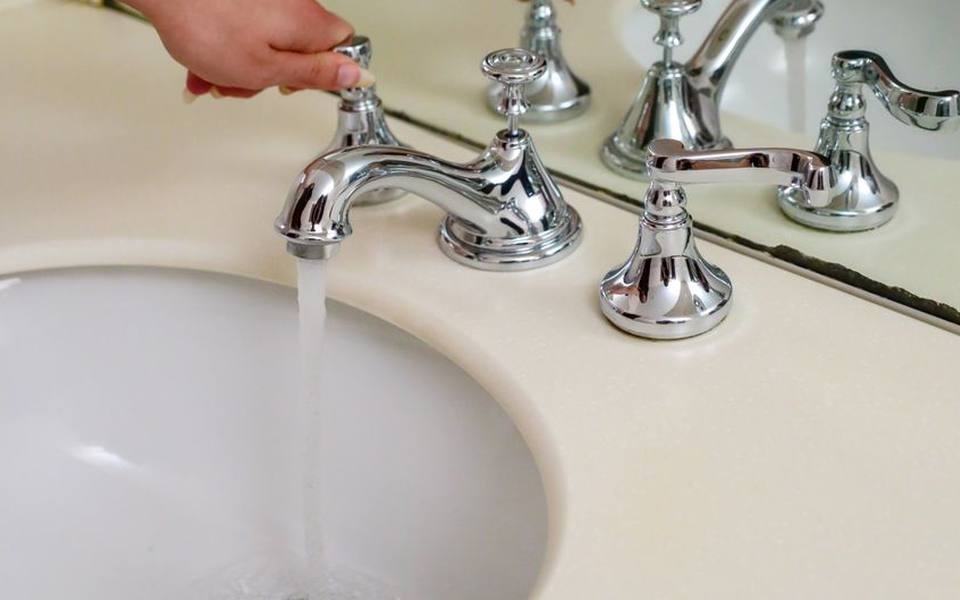
Hand washing remains the gold standard for preserving crystal luster. Fill a plastic basin or line a stainless-steel sink with a rubber mat or thick kitchen towel to cushion accidental slips. Use lukewarm water and a single drop of mild, unscented dish soap applied with a soft sponge. Never hold a wine glass by the foot while washing the bowl; torque applied across the thin stem is the primary cause of sudden stem breakage.
Drying requires two lint-free microfiber or linen cloths. Hold the bowl gently with one cloth in your palm while using the second cloth to wipe the interior and exterior walls. Avoid twisting the bowl against the stem. If water spots develop, hold the inverted bowl over a pot of steaming water for a few seconds before polishing. The gentle steam dissolves mineral deposits effortlessly, leaving the crystal streak-free and brilliant.
Storage Guidelines and Everyday Enjoyment
Where and how you store crystal determines its longevity between holiday dinners and weekly tastings. Many homeowners store glasses rim-down on cabinet shelves to keep dust from settling inside the bowl. However, the rim is the thinnest, most vulnerable part of hand-blown stemware. Storing heavy crystal upside down puts continuous downward pressure on that delicate edge and can trap stale cabinet odors inside the bowl.
Instead, store all stemware upright on stable shelves with ample breathing room between individual glasses. Glasses should never touch each other; vibration from walking across the floor or closing cabinet doors can cause rims to click together, creating microscopic chips that eventually develop into full fractures. If dust settles between infrequent uses, a quick rinse with warm water and a linen polish prepares them for the table.
Ultimately, glassware is meant to be enjoyed rather than hidden away in protective boxes. Incorporating vintage cut stems, sturdy Italian goblets, and classic French flutes into your regular dinner routines elevates ordinary weeknight meals into memorable occasions. Treat them with sensible care, wash them by hand, and your collection will endure through generations of shared toasts.
Published 2026-09-21 · reviewed with each rebuild, last September 2026.
Find wineries near you
The directory lists 14,608 wineries by state and city — pick your state or use the “Near me” button in the header.
More guides
-
 Service
How to Become a Sommelier: Career Paths, Tasting Technique, and Practical Service
-
 Service
What to Wear to a Winery: Practical Outfits, Etiquette, and Food Pairings
-
 Owning
The Ultimate Wine and Food Pairing Guide: From Cheese to Desserts
-
 Buying
Understanding Kosher, Organic, and Biodynamic Wines: Production, Storage, and Pairings
-
 Buying
A Guide to Ordering Wine Online and Purchasing Bulk Alcohol for Events
-
 Buying
The Chemistry of Wine Fermentation: Yeast Roles, Malolactic Conversion, and Flavor Balance
-
 Buying
Understanding the Wine Sweetness Scale: From Crisp Dry to Indulgent Sweet
-
 Money
MoneyWine Tasting Costs Explained: What to Expect in Napa Valley and Beyond
-
 Owning
The Ultimate Guide to Charcuterie Boards: Styling, Pairings, and Recipes
-
 Owning
Crystal Wine Glassware Guide: Types, Brands, Care, and Stemless Styles
-
 Buying
Understanding Bold Reds: Dry Wines, Tannin Profiles, and Old Vine Zinfandels
-
 Storage
Choosing the Best Wine Fridge: Sizing, Cooling Zones, and Placement Guide
-
 Buying
Non-Alcoholic Wine Guide: Methods, Profiles, and What to Expect
-
 Buying
Personalized Wine Gifts: Custom Bottles, Engraved Glasses, and Custom Labels
-
 Owning
Essential Wine Accessories: Openers, Preservation Systems, Decanters, and Storage
-
 Buying
White and Rosé Wines: From Crisp Whites to Dry Rosés and Late Harvest Riesling
-
 Buying
Food and Wine Pairing Guide: Salmon, Turkey, Ham, Lamb, and Lasagna
-
 Buying
Large Format Wine Bottles: Magnums, Jeroboams, and Champagne Sizes Explained
-
 Service
Farm Wineries, Agritourism, and Sustainable Vineyard Experiences Across America
-
 Owning
Wine and Food Pairing Guide: Charcuterie Boards, Cheeses, and Dinner Courses
-
 Buying
Specialty Wines, Modern Cellar Styles, and Buying Smart Online
-
 Owning
Planning Memorable Vineyard Visits, Historic Estates, and Tasting Room Escapes
-
 Buying
Sweet and Refreshing White Wines: A Guide to Styles, Grapes, and Tasting Profiles
-
 Service
Cooking with Wine and the Practical Art of Culinary Pairings
-
 Storage
Modern Wine Refrigerators and Coolers: Sizing, Placement, and Everyday Performance
-
 Service
Winery & Vineyard Weddings: Venues, Planning, and Event Etiquette
-
 Owning
Electric Wine Openers, Vacuum Stoppers, and Preservation Systems: A Complete Guide
-
 Safety
Traveling with Wine: Suitcases, Luggage Bags, and Airline Rules
-
 Buying
Red Wine Varietals Explained: Malbec, Cabernet, Merlot, and Zinfandel
-
 Owning
Artisan Charcuterie Boards and Wine Party Snack Styling Guide
-
 Buying
Finding and Repurposing Used Oak Wine Barrels for Home and Garden
-
 Buying
Garlic Infused and Extra Virgin Olive Oils: Flavors, Brands, and Culinary Uses
-
 Buying
US Wine Trails and Estate Wineries: Scenic Routes and Destination Guide
-
 Buying
Crystal Wine Glasses, Fine Stemware, and Barware Accessories Guide
-
 Service
The Complete Guide to Winery Visits: Tastings, Vineyard Tours, and Visitor Experiences
-
 Owning
Pairing Wine with Charcuterie, Cheeses, and Seasonal Dinners
-
 Buying
Wine Glassware, Decanters, and Accessories Buyer Guide
-
 Storage
Home Wine Storage, Refrigeration, and Cellar Inventory Guide
-
 Buying
Winery Tours, Tasting Room Experiences, and Vineyard Weddings